The Best Handgun Ammo for Every Shooters Needs
When a defensive round fails to expand or over-penetrates, the shooter faces a deadly gamble, and selecting the right handgun ammo eliminates that uncertainty. At its core, a cartridge combines a primer, propellant, and bullet in a single brass case, where the firing pin ignites the primer to burn powder and propel the projectile down the barrel at controlled velocities. The key benefit lies in matching bullet design—such as jacketed hollow points for controlled expansion or full metal jackets for deep, reliable penetration—to your specific self-defense or target-shooting goal. For consistent performance, always chamber the exact load you intend to carry, verifying that it cycles and groups accurately in your firearm before relying on it.
Choosing the Right Cartridge for Your Sidearm
Choosing the right cartridge for your sidearm begins with matching the round to its intended role, not just the gun’s brand. For defensive use, prioritize handgun ammo that offers reliable expansion and adequate penetration, typically in 9mm Luger, .40 S&W, or .45 ACP. The 9mm is often favored for its higher capacity, lower recoil, and excellent ballistic performance with modern jacketed hollow points. For concealed carry, a compact pistol’s shorter barrel reduces velocity, so select a load designed for that length—like a short-barrel defensive round—to ensure consistent expansion. Always verify the cartridge’s pressure rating against your firearm’s specifications, especially with +P loads, which increase wear. For training, Rifle Ammo for Sale choose cheaper full metal jacket rounds with the same weight and point of impact as your defense load to maintain muscle memory. Recoil sensitivity matters: a cartridge you shoot accurately under stress is superior to a more powerful one you flinch with. Finally, test a box of your chosen defensive ammo through your exact sidearm to confirm flawless feeding and ejection before relying on it.
How Bullet Weight and Velocity Affect Recoil and Accuracy
Bullet weight and velocity form the recoil equation you feel in your palm: heavier slugs push harder against your grip, while hotter velocities snap the muzzle upward faster. This physics directly shapes accuracy, because a snappy impulse disrupts your sight alignment before the round clears the barrel. Lighter, faster loads reduce perceived push but amplify muzzle flip, demanding a firmer wrist to stay on target. Heavier loads produce a slower, rolling shove that many shooters track more consistently. Match your cartridge’s ballistics to your grip strength and follow-through. For precise shot placement, matching bullet weight to your sidearm’s barrel twist rate matters as much as velocity. To dial in your load:
- Test 115-grain versus 147-grain loads at the same target distance.
- Chronograph velocities to quantify recoil impulse differences.
- Group five shots each, noting vertical stringing from muzzle rise.
Full Metal Jacket vs. Hollow Point: What Each Round Does Best
Full metal jacket (FMJ) rounds excel at penetration and reliable feeding, making them ideal for range training and competition where barrier defeat matters more than tissue damage. Their solid construction prevents fragmentation, allowing clean holes in paper targets and reducing ricochet risk on steel. Hollow points, by contrast, expand upon impact, transferring maximum energy to stop threats quickly. This makes them superior for self-defense, as the increased diameter and depth reduce over-penetration through walls or an assailant. FMJ offers cost-effective practice with identical recoil to carry loads, while hollow points provide the terminal performance needed when a miss could be fatal.
FMJ drills penetration and function; hollow points deliver controlled expansion for defensive stopping power.
Matching the Load to Your Firearm’s Barrel and Action
Matching handgun ammo to your barrel and action isn’t just about caliber—it’s about how the cartridge behaves under your specific setup. A snug, supported barrel chamber (like in a tight match-grade pistol) will reward you with lighter loads that cycle slower, while a looser service-action gun may need hotter ammo to reliably unlock the slide. Pay attention to your recoil spring weight: a heavier spring demands more gas pressure to push the slide back, so underpowered target loads can cause stovepipes. Conversely, running spicy +P ammo in a worn or delicate action risks accelerated wear on the locking lugs and frame. Always test your chosen round through your actual firearm before trusting it for defense or competition. Bullet seating depth also matters—a round that’s too long might jam against the rifling, spiking pressure. But the sweet spot only reveals itself when you shoot for function, not just accuracy.
Why Barrel Length Changes Pressure and Muzzle Flash
Barrel length directly dictates the dwell time of the burning powder charge behind the bullet, which fundamentally alters pressure dynamics and muzzle flash in handgun Shotgun Ammo for Sale ammo. A shorter barrel reduces the volume available for gas expansion, causing peak pressure to spike earlier and more violently, yet it also drops the overall pressure curve faster after the bullet exits. This incomplete combustion in a short barrel pushes unburnt powder and superheated gases into open air, producing a larger, brighter muzzle flash. Conversely, a longer barrel allows pressure to decay more gradually, extracting more energy from the powder and leaving less residual fire. The practical sequence is: (1) gas expands faster in a tighter, shorter space; (2) bullet exits before powder fully burns; (3) unburnt particles ignite in ambient oxygen; (4) visible flash increases.
Revolver vs. Semi-Auto: Which Ammo Feeds and Cycles Reliably
Revolvers and semi-autos have fundamentally different reliability demands. A revolver’s cylinder indexes mechanically, so ammunition feeding reliability is virtually immune to bullet shape or case profile; even flat-nosed wadcutters chamber smoothly as long as they fit the cylinder length. Rim thickness, however, matters for proper headspacing and firing pin contact. Conversely, a semi-auto’s feed ramp, extractor, and magazine geometry make it sensitive to overall length, bullet ogive, and case rim consistency—hollow points that catch on the ramp cause failures, and underpowered loads may not cycle the slide 7mm WSM Ammo for Sale fully. The practical result: for semi-autos, select ammunition with a proven reliability profile for your specific gun, while revolvers prioritize consistent primer seating and rim dimensions over bullet shape.
Penetration, Expansion, and Stopping Power Explained
Penetration, expansion, and stopping power form the core terminal performance triad for handgun ammo. Penetration depth dictates whether the bullet reaches vital organs; the FBI-standard 12–18 inches in ballistic gelatin is the practical benchmark for defensive loads. Expansion, or mushrooming, increases the temporary cavity and wound diameter, trading some penetration for greater tissue disruption—jacketed hollow points achieve this by hydraulically peeling back upon impact. Stopping power is the cumulative effect, representing the bullet’s ability to rapidly incapacitate through a combination of sufficient depth and expanded diameter, not raw energy. For handgun ammo, a balance of roughly 14 inches of penetration with 1.5 times original bullet diameter typically offers optimal stopping power. Q: Does a larger caliber always stop better? A: No—a poorly penetrating load in .45 ACP can underperform a well-penetrating 9mm hollow point; shot placement and penetration consistency matter more than caliber alone.
What Gel Test Results Reveal About Defensive Rounds
Ballistic gelatin offers a standardized medium to compare how defensive rounds perform in human-like tissue, revealing critical data on penetration depth and expansion consistency. A defensive round’s gel test results show whether it reaches the FBI’s 12–18 inch benchmark, ensuring it can traverse varied barriers like heavy clothing or Handgun Ammo for Sale bone while still damaging vital organs. Expansion, measured as final diameter, indicates how rapidly energy transfers, but gel results also expose over-penetration risks—rounds exceeding 18 inches may threaten bystanders. However, gel cannot simulate lung density or rib impact, so a perfect gel profile still demands shot placement discipline. By analyzing these metrics, you choose ammunition that balances stopping power with safety, avoiding underperforming loads that fail to expand at real-world velocities.
How to Balance Over-Penetration Risk with Terminal Performance
Balancing over-penetration risk with terminal performance means choosing a load that stops inside a threat while still reaching vital organs. You achieve this by prioritizing **controlled expansion and weight retention** over raw velocity. A bonded jacketed hollow point that expands reliably at typical self-defense distances will dump more energy and reduce pass-through, whereas a full metal jacket risks exiting and endangering bystanders. Test your chosen round through heavy clothing and gel to confirm it expands consistently; if it fails to open, penetration deepens dangerously. Opt for standard-pressure loads in common calibers, as over-velocity rounds can defeat expansion and punch through. Finally, accept that Ammunition for Sale no round guarantees zero exit, but a proven expanding bullet offers the best compromise between stopping threats and limiting collateral damage.
Effective balance hinges on verified expansion, moderate velocity, and bonded construction to keep penetration within 12–18 inches while minimizing exit risk.
Reading Box Labels and Understanding Ballistic Data
The box of handgun 6.5 PRC Ammo for Sale ammo is a quiet dossier, and reading it begins with the caliber line—like 9mm Luger versus .40 S&W—which dictates whether the round chambers at all. Next, the bullet weight, say 115 or 147 grains, tells you how the cartridge will feel: lighter grains snap faster, heavier ones push slower but deeper. The listed velocity, often in feet per second, is a starting point, not a promise, because your barrel length and altitude will shift that number. Ballistic data like muzzle energy, usually in foot-pounds, gives a rough sense of stopping power, but it’s the trajectory chart on the side—if present—that matters for zeroing your sights. You are not just reading numbers; you are predicting how the bullet will behave in your specific hands, on your specific day. Finally, check the primer type and casing material, as brass cases feed more reliably than steel in finicky magazines, and boxer primers are what you want if you ever reload.

Decoding Velocity, Energy, and Sectional Density Numbers
When you’re decoding velocity, energy, and sectional density numbers on a handgun ammo box, think of them as a story about how the bullet will perform. Velocity (fps) tells you how fast it leaves the barrel, which directly affects your point of aim and recoil feel. Energy (ft-lbs) is the brute-force math of that speed times bullet weight, showing you downrange punch for defensive or hunting scenarios. Sectional density, though, is the sneaky metric—it’s bullet weight divided by its diameter squared, giving you a clue about penetration through barriers or tissue. A high sectional density number often means deeper, straighter tracks, while lower numbers might expand quicker. For handgun rounds, correlating velocity and sectional density is your shortcut to predicting whether a load will over-penetrate or stop short. Here’s a quick way to apply them:
- Check velocity first to understand trajectory and impact force.
- Compare energy to your target’s expected resistance.
- Use sectional density to judge penetration consistency.
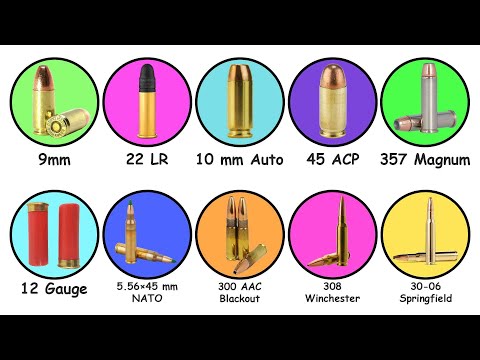
Common Calibers Compared: 9mm, .40 S&W, .45 ACP, and .380 ACP
When comparing common handgun calibers, the box label’s velocity and energy figures reveal practical trade-offs. The 9mm Luger typically shows higher velocity (1,150–1,250 fps) with manageable recoil, making it the baseline for capacity and control. The .40 S&W offers a heavier bullet (180 grains) at moderate speed, trading magazine capacity for increased energy transfer. The .45 ACP, often listed at 850–950 fps with a 230-grain projectile, delivers the largest diameter and deep penetration but yields higher felt recoil and lower capacity. The .380 Rimfire Ammo for Sale ACP, usually 90–95 grains at ~1,000 fps, provides minimal snap, suitable for pocket pistols, though its energy lags significantly. Bullet weight and muzzle energy on the box directly dictate these handling and stopping-power realities, so always compare those numbers across the four before choosing based on your grip strength and intended use.
| Caliber | Typical Bullet Weight | Muzzle Velocity (fps) | Muzzle Energy (ft-lbs) | Primary Trade-off |
|---|---|---|---|---|
| .380 ACP | 90–95 gr | 950–1,050 | 180–200 | Low recoil, weak expansion |
| 9mm | 115–124 gr | 1,150–1,250 | 350–400 | Balanced capacity and control |
| .40 S&W | 155–180 gr | 950–1,100 | 400–500 | More power, harsher snap |
| .45 ACP | 200–230 gr | 850–950 | 350–450 | Large diameter, heavy recoil |
Storing and Handling Your Cartridges for Longevity

For handgun ammo longevity, control moisture and temperature fluctuation above all else. Store cartridges in a sealed, airtight container with desiccant packs, avoiding direct contact with bare metal surfaces that promote condensation. Keep the ammo in a cool, dry environment—around 60–70°F with low humidity—since heat accelerates powder degradation and extreme cold can crack primers. Rotate your carry ammo every six months, as chambering and rechambering the same round can setback the bullet into the case, raising pressure. 6.5 Creedmoor Ammo for Sale Handle cartridges by the case or rim, not the bullet or primer, to avoid denting or contaminating them with skin oils.
Never oil or lubricate cartridges; a thin film attracts dust and can seep into the primer, killing ignition reliability.
Finally, inspect each round monthly for corrosion, green patina on brass, or loose bullets, discarding any suspect rounds immediately rather than risking a malfunction.
How Heat, Humidity, and Sunlight Degrade Powder and Primers
Heat accelerates the chemical breakdown of nitrocellulose-based powders, producing acidic byproducts that destabilize propellant burn rates. Humidity introduces moisture that hydrolyzes the nitroglycerin or nitroguanidine in double-base powders, while also corroding primer compounds—especially lead styphnate—which lose sensitivity and reliability. Sunlight’s ultraviolet radiation catalyses oxidation within powder grains and degrades the lacquer seal on primers, promoting erratic ignition and pressure spikes. Over months, stored cartridges shift from consistent performance to misfires, squibs, or over-pressure events. specialty sports Temperature cycling exacerbates these effects by forcing moisture into case necks and primer pockets, accelerating the degradation timeline.
The Best Ways to Rotate and Preserve a Carry Ammo Stash
To keep your defensive loads reliable, treat your carry ammo stash with a strict rotation schedule. Mark each magazine or box with a date using a permanent marker, then cycle the oldest rounds into practice sessions every three to six months, firing them to confirm they still function flawlessly. This prevents the degradation of primers and powder from prolonged compression inside a magazine spring. When storing, avoid leaving rounds chambered for weeks on end; instead, rotate which magazine sits loaded. For preservation, store spare boxes in a cool, dry place away from direct sunlight, and periodically inspect for corrosion or setback. Rotating your carry ammo stash ensures that what you trust your life to is always fresh, clean, and ballistically consistent.
Practical Tips for Testing and Selecting a Daily Carry Load
Start by buying several defensive loads in your gun’s caliber, then fire at least 200 rounds of each from your actual carry pistol—not a rental—to check for reliable feeding, ejection, and primer strikes. Shoot from concealment and awkward positions, because a load that runs flawlessly on a bench may fail when you’re drawing from a holster or shooting one-handed. Measure point-of-impact shift at 7 and 15 yards; your carry ammo should group close to your practice rounds, or you’ll need to re-zero your sights. Penetration testing through heavy clothing or denim is non-negotiable—use wet pack or ballistic gel to confirm the bullet expands without over-penetrating past 18 inches. Cycle a full magazine through the gun after it sits loaded for a week to rule out setback or bullet creep. *The load that wins on paper is worthless if it doesn’t cycle when your grip is compromised or the gun is dirty.* Finally, commit to one batch lot, verify the same recoil impulse feels controllable in rapid strings, and carry it exclusively for a month before trusting it daily.
Why You Should Run at Least 100 Rounds of Your Defensive Pick
Running at least 100 rounds of your defensive pick verifies reliable function under real recoil, not just bench accuracy. A load that feeds flawlessly with light range ammo may fail to chamber, extract, or lock the slide back when driven harder by its own pressure curve. The 100-round threshold exposes intermittent issues—marginal primer strikes, weak ejection, or slide short-stroking—that appear only after sustained firing heats the gun. It also confirms your pistol’s magazine springs and feed ramp tolerate that specific bullet profile, especially hollow points with wide mouths. Finally, it lets you observe point-of-impact shift from your practice load, ensuring your defensive zero matches where the bullet actually lands under stress. Without this benchmark, you are 7mm-08 Ammo for Sale trusting ballistics data over your own gun’s behavior.
Accurate, Low-Recoil Options for New Shooters and Smaller Frames
For new shooters or those with smaller frames, low-recoil handgun loads improve accuracy by reducing muzzle flip and flinching. Start with 9mm 147-grain flat-point rounds or .38 Special 148-grain wadcutters, which produce soft, push-like recoil rather than sharp snaps. Seek loads labeled “low flash” or “reduced velocity” from reputable makers; these still penetrate adequately for self-defense while staying controllable. However, verify that your chosen firearm cycles these lighter loads reliably, as some pistols need a break-in period with standard-pressure rounds first. Test a box of each candidate at the range, shooting five-shot groups from a rest, then from one hand—choose the option that keeps hits within a palm-sized circle at 7 yards.
Accurate, low-recoil options for new shooters and smaller frames center on heavy-for-caliber bullets, reduced velocities, and reliability testing—prioritizing control over raw power.